


7
Years
100+
Speakers
60+
Organizations
25+
Startups
7th
Edition of Engaging India @ Almedalen
AI, You, and I
Identity, Industry, Innovation
Artificial intelligence is no longer a distant prospect. It is already reasoning, creating, and making decisions; essentially, it has started influencing and shaping the institutions, economies, and social systems that define modern life. As this shift accelerates, it raises fundamental questions: 1. Who controls the intelligence influencing our societies? 2. How do we ensure it reflects shared human values? The 7th edition of Engaging India at Almedalen in June 2026 takes these questions as its starting point. The theme this year is "AI, You, and I: Identity, Industry, Innovation", where, through panel discussions and keynote speeches, we examine artificial intelligence through three interconnected lenses. 1. How AI is reshaping human identity and agency. 2. How it is transforming industries, supply chains, and the nature of work. 3. How it can contribute to a sustainable planetary future, even as its own infrastructure places new demands on energy and resources. Sweden and India bring complementary strengths to these questions. Sweden's tradition of open innovation, strong public institutions, and climate-led industrial policy meets India's scale, deep technology talent, and experience building digital infrastructure for a billion people. Together, they represent distinct but aligned innovation ecosystems, united by democratic values and a shared stake in ensuring AI serves society. Across three seminars, leaders from policy, industry, and academia will explore how AI can be developed and governed responsibly - building the kind of trust and collaboration that technology alone cannot provide. Join us on 23 June 2026 to hear thought leaders from India and Sweden deliberate and exchange ideas on these fundamental questions.
What happened at Engaging India at Almedalen 2026
Talks
In this address, the Indian Ambassador to Sweden explores the deepening strategic partnership between the two nations, which is rooted in centuries of historical ties and shared democratic values. He highlights how the relationship has evolved into a sophisticated alliance focused on innovation, defense, and economic growth within a multi-trillion dollar market. A significant portion of the speech examines the transformative power of AI, comparing its potential impact to the digital revolution that enabled India’s massive financial inclusion success. The Ambassador advocates for a model where technology serves as a public good, ensuring that advancements remain accessible and equitable for the global south. Ultimately, he envisions a future where diplomacy and industry co-create the policy frameworks necessary to navigate a post-AI world.
This interview with Dr. Pramod Varma explores the critical relationship between Digital Public Infrastructure (DPI) and the advancement of artificial intelligence. He explains that established frameworks for digital identity and payment systems are essential prerequisites for effectively deploying AI at a societal scale. Dr. Varma introduces Networks for Humanity, a global initiative aimed at fostering an internet of value where economic assets are digitally verifiable and accessible to everyone. He challenges the idea of AI ownership, characterising it instead as a pervasive capability that will be infused into everything from infrastructure to physical logistics. Furthermore, he encourages entrepreneurs to focus on unbundling value chains and developing specialised edge models to solve real-world problems. Ultimately, the discussion emphasises a shift toward an intelligence era marked by high-trust, low-cost transactions and global economic abundance.
In this address, Professor Owe Rönström explores the evolving relationship between human identity and artificial intelligence. He suggests that as AI becomes more distinct through its own feedback loops, humans will instinctively seek new ways to differentiate themselves from these machines. While AI excels at logic, large-scale data processing, and structured systems, it lacks the capacity for genuine humor, playfulness, and social spontaneity. Rönström argues that because AI is fundamentally rule-bound, it cannot experience the performative and unpredictable nature of play. Consequently, he predicts that humans will increasingly define their identity through emotional and social nuances like flirtation and art. Ultimately, the source posits that the rise of AI will lead people to value the uniquely human ability to play more deeply.
State Secretary Daniel Westland highlights the strategic evolution of the partnership between Sweden and India, emphasizing a shift from long-standing cooperation toward active implementation of green technologies. This alliance is anchored by four key pillars: stability, economic growth, emerging technology, and environmental resilience. Central to this collaboration is the LeadIT initiative, which seeks to decarbonize heavy industry while utilizing Swedish innovation and Indian scalability to address global climate challenges. Westland underscores that clean energy is the vital foundation required to support both industrial transformation and the rapid expansion of artificial intelligence. Ultimately, the relationship aims to foster mutual investment and co-creation to ensure long-term economic competitiveness and a sustainable future for both nations.
Fireside Chats
This interview captures a strategic discussion between Ambassador Anurag Bhushan and State Secretary Daniel Westlén regarding the evolving economic and diplomatic ties between India and Sweden. The speakers highlight the recent Free Trade Agreement as a pivotal mechanism for reducing market friction and enhancing regulatory predictability for both major corporations and small startups. They emphasize a shared vision for the next five years, aiming to double bilateral trade while collaborating on global challenges like artificial intelligence and industrial sustainability. The dialogue also showcases the LeadIT initiative, which focuses on transitioning hard-to-abate sectors toward greener practices through international cooperation. Finally, the leaders underscore the importance of fostering innovation ecosystems by connecting academia and private industries to drive technological advancement.
In this interview, investor Sara Öhrvall discusses how corporate boards are shifting from simple experimentation to long-term business transformations driven by artificial intelligence. She emphasizes that large organizations should leverage their proprietary data to build unique infrastructure rather than relying solely on common external models. The conversation highlights the potential for strategic partnerships between Sweden and India, particularly in developing industrial and physical AI for manufacturing. Additionally, Öhrvall expresses concern regarding the workforce transition, warning that current preparations for potential job losses and retraining needs are insufficient. She advocates for a proactive approach, suggesting that leaders should overreact to the technology's impact to ensure future stability. Ultimately, the source frames AI as a fundamental shift requiring urgent, top-down leadership and significant capital investment.
In a fireside chat with Darja Isaksson, the director general of Vinnova, regarding Sweden’s position as a global leader in innovation. The conversation explores how artificial intelligence can serve as a catalyst for industrial transformation and the circular economy by enhancing data sharing and organizational trust. A significant focus is placed on the funding challenges faced by Swedish startups, which often rely on foreign capital to achieve international scale. The dialogue also highlights the potential for cities to drive market demand for sustainable technologies through strategic procurement and coordination. Ultimately, the source outlines a vision for systems innovation that balances academic research with rapid prototyping to address urgent societal and environmental challenges.
In a fireside chat between Frida Monsén of Vattenfall and Swaminathan Ramanathan regarding the profound impact of artificial intelligence on professional identity and organizational culture. The speakers explore how AI functions as a learning entity that mirrors human behavior, requiring employees to develop both digital literacy and deep self-awareness to maintain agency. Monsén emphasizes that as AI agents become integrated partners in the workforce, leadership must prioritize transparency and ethical guardrails to foster trust. The conversation highlights a future where work is redefined by human-AI collaboration, suggesting that AI can multiply human intelligence rather than simply replacing it. Ultimately, the dialogue suggests that maintaining a strong, human-centric culture is essential because AI inevitably learns from and reflects the environment it inhabits. This exchange underscores the urgent need for organizations to proactively shape their future structures while the technology is still evolving.
Panel Discussions
This panel discussion explores how artificial intelligence is reshaping the industrial landscape, specifically focusing on the strategic partnership between Sweden and India. Experts from finance, trade, and heavy industry examine whether AI functions more as a productivity accelerator or a technical complication within the global economy. While speakers highlight AI's potential to optimize decarbonization efforts and speed up knowledge transfers, they also express concerns regarding its high energy consumption and data security. The dialogue emphasizes that while significant capital is flowing into AI infrastructure, its true impact on global GDP remains dependent on human trust and measurable efficiency gains. Ultimately, the participants advocate for trusted interdependence between nations to ensure technological advancements support a sustainable and equitable industrial transition.
This panel discussion explores the transformative role of artificial intelligence in shaping a sustainable industrial future. Experts from economic, environmental, and technological sectors debate whether AI serves primarily as a tool for productivity or a catalyst for fundamental business model reinvention. Key themes include the technology's potential to democratize climate data, identify new growth areas within planetary boundaries, and address inefficiencies in carbon-heavy industries like construction. While some participants express optimism regarding innovation and job creation, others caution that realizing these benefits requires high-quality data and a focus on social equality. Ultimately, the speakers emphasize that AI's impact depends on strategic human direction and the continuous upskilling of the workforce.
This panel discussion explores how artificial intelligence can function as a "Swiss army knife" to drive the green transition across various Swedish industries. Experts from sectors like infrastructure, energy, and finance discuss the necessity of building sustainable data centers and utilizing "sovereign AI" to ensure data security and environmental responsibility. Innovative startups present new technologies, including membrane-free electrolysis for cheaper green hydrogen and AI-managed home energy subscriptions that simplify grid flexibility for consumers. The conversation highlights a shift from retrospective sustainability reporting to using predictive AI models for real-time decision-making and ethical industrial production. Ultimately, the participants emphasize that horizontal collaboration and standardized disclosure frameworks are essential for scaling these innovations globally. The dialogue underscores that while AI requires significant energy, its application in smart grids and circular business models is vital for meeting climate targets.
Presentations
Viral Thakker presents a case for how artificial intelligence can serve as a catalyst for the global energy transition and climate innovation. He highlights that while energy demands are shifting rapidly due to geopolitical factors, current climate data often lacks the accuracy needed to survive professional audits. To address this, his company, Credibl, utilizes a constellation of specialized AI agents designed to automate reporting, verify data quality, and provide expert decarbonization advice. These tools help organizations navigate complex regulatory standards while optimizing their carbon reduction strategies through precise modeling. Ultimately, Thakker argues that sustainability and economic prosperity are compatible goals when supported by trustworthy, high-speed technological solutions. This approach aims to move AI from a mere software feature to a core, reliable team member in the fight against climate change.
This presentation introduces Flower, a rapidly expanding Swedish energy technology firm focused on accelerating the global transition to renewable power. Founder & CEO John Diklev explains that the company utilizes an AI-driven optimization platform to manage a diverse portfolio of flexible assets, such as batteries, electric vehicles, and industrial plants. By predicting market trends and weather patterns, the system ensures these resources operate with maximum efficiency to stabilize the electrical grid. The company also acts as a strategic intermediary, absorbing the risks of intermittent wind and solar production to provide predictable energy costs for industrial consumers. Ultimately, Flower aims to make sustainable energy more affordable and bankable by reducing the capital intensity required for green infrastructure. This comprehensive approach addresses the "energy trilemma" by balancing sustainability with financial viability and national sovereignty.
Shivesh Kumar introduced a humanoid robot and a quadruped named Fido to demonstrate the current state of physical and cognitive AI. The discussion highlights the Moravec’s paradox, explaining that while AI excels at complex mental tasks like math, achieving human-like physical dexterity and movement remains a significant challenge. These machines are being developed for diverse roles ranging from factory manufacturing and nuclear power plant inspection to serving as interactive university tour guides. Beyond technical specifications, the speakers explore the societal implications of robotics, including their impact on future career choices and the potential for AI to navigate complex global sustainability issues. The session concludes by suggesting that humor and emotional connection may represent the next major milestone in the evolution of human-robot interaction.
Meet the Game Changers of 2026
Fireside Chat

H.E. Anurag Bhushan
Ambassador of India to Sweden

Daniel Westlén
State Secretary,
Ministry of Climate & Enterprise

Pramod Varma
Chief Architect of Aadhaar & Co-founder & Chief Architect, Networks for Humanity

Sara Öhrvall
Senior Advisor & Board Director,
Investor AB, Axfood, Verisure

Darja Isaksson
Director General,
Vinnova

Marco Busch
Global Head-Ag R&D,
PI Industries Ltd

Klaus Kunz
Head of Regulatory Development & Government Affairs,
PI Industries
Presentations

Viral Thakker
Co-Founder and Chief Business Officer,
Credibl

John Diklev
Founder and CEO,
Flower

Shivesh Kumar
Assistant Professor,
Chalmers University

Humanoid Robot
Chalmers University
Panel Speakers

Owe Ronström
Professor Emeritus,
Uppsala University

Swaminathan Ramanathan
Lecturer,
Uppsala University

Ola Hansén
Director of Public Affairs,
Stegra

Rupali Mehra
Founder, Content People AB & Director of Business Development - Nordics, Credibl

Andreas Håkansson
Partner and Head of AI & Data Management,
PwC Sweden

Frida Monsén
Global Head of L&D Strategy & Portfolio,
Vattenfall

Per Andersson
Head of Secretariat,
LeadIT

Björn Johansson
Professor,
Chalmers University

Raine Isaksson
Associate Professor & Docent,
Uppsala University

Stephan Palm
CEO,
Lager 157

Lena Sellgren
Chief Economist,
Business Sweden


Charlotta Brask
Head of Sustainability,
Telia Sweden

Sofia Högman
Trade Commissioner of Sweden to India,
Business Sweden

Kristofer Dreiman
Chief Scientific Officer,
Länsförsäkringar AB

Maria Rosendahl
Head of Industrial Policy, Teknikföretagen

Erik Enecker
CEO and Co-Founder,
Ecometrix

Katarina Björk
Chief Impact Officer, Exponential Roadmap Initiative
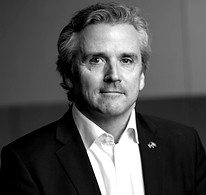
Peter Dahlen
Managing Director,
American Chamber of Commerce

Jens Magnusson
Chief Economist,
SEB

Rutvika Acharya
CEO & Co-Founder,
Caplyzer

What our speakers have to say

"True sustainability isn’t born from slogans—it’s shaped by science, strengthened by collaboration, and powered by technology that works. When we look beyond ideology and listen to evidence, we don’t just imagine the future—we build it, together."
Daniel Westlén,
State Secretary to the Minister of Climate & Environment,
Ministry of Climate & Enterprise
Our flagship program

What is Engaging India at Almedalen?
Engaging India at Almedalen is our flagship annual seminar series held during Sweden's official Almedalen Week bringing together thought-leaders from industry, academia and government from Sweden and India to engage on global issues such as climate action, sustainable development, technology and collaborative innovation.
Who organises Engaging India at Almedalen?
Engaging India at Almedalen is organised by Content People AB with support from Embassy of India in Sweden, Uppsala University and Zerocity. Content People AB is a strategic and sustainability communications firm that focuses on building strategic and impact driven engagements between India and Sweden.
Who is it meant for?
Engaging India at Almedalen is meant for policy makers, corporates, academia, professionals, students, or enthusiasts interested in topics of climate change and sustainable development through technological innovation and collaborative action between India and Sweden.
What to expect at Engaging India @ Almedalen

Keynote Address

Workshops

Panel Discussions

Case Study Presentations

Startups

Mingle

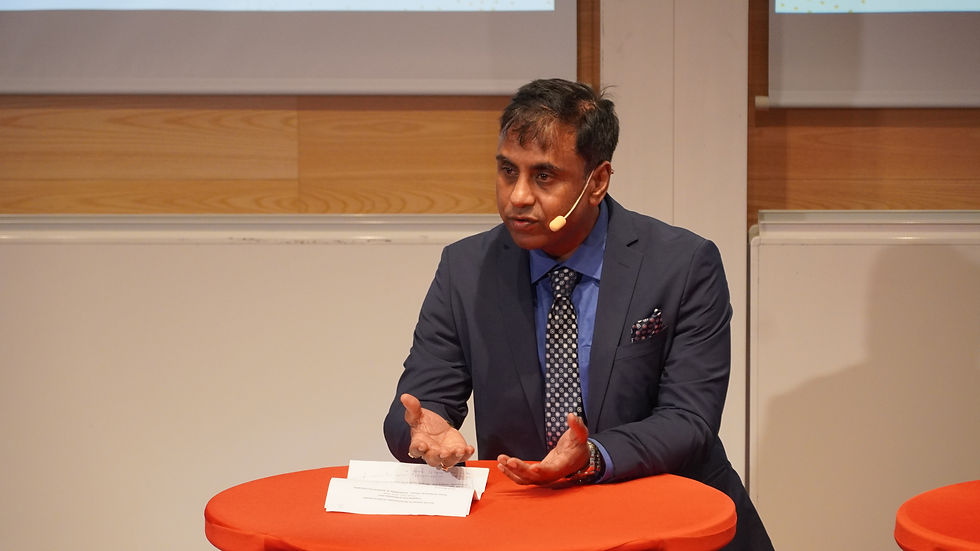

Over the years
H.E. Ambassador Tanmaya Lal on India-Sweden Samband
Nandan Nilekani on aligning the 2030 Sustainable Development Goals to the rollout of Digital Public Goods
Professor Owe Ronström on the idea behind Engaging India at Almedalen
Ambassador Anurag Bhushan on Strengthening India–Sweden Collaboration in Sustainability and Innovation
Our participants


Our story
Since 2019, Engaging India at Almedalen has hosted a diverse line-up of speakers from Swedish and Indian industries to exchange ideas and discuss collaborative solutions to some of the most pressing global climate challenges. By bringing together the Swedish and Indian innovation, technology and sustainability ecosystems, Engaging India at Almedalen serves as a platform to catalyse co-thinking, co-solutioning and co-creation between India and Sweden on global issues such as climate action, sustainable development, and collaborative innovation.
Themes explored previously at Engaging India at Almedalen include: